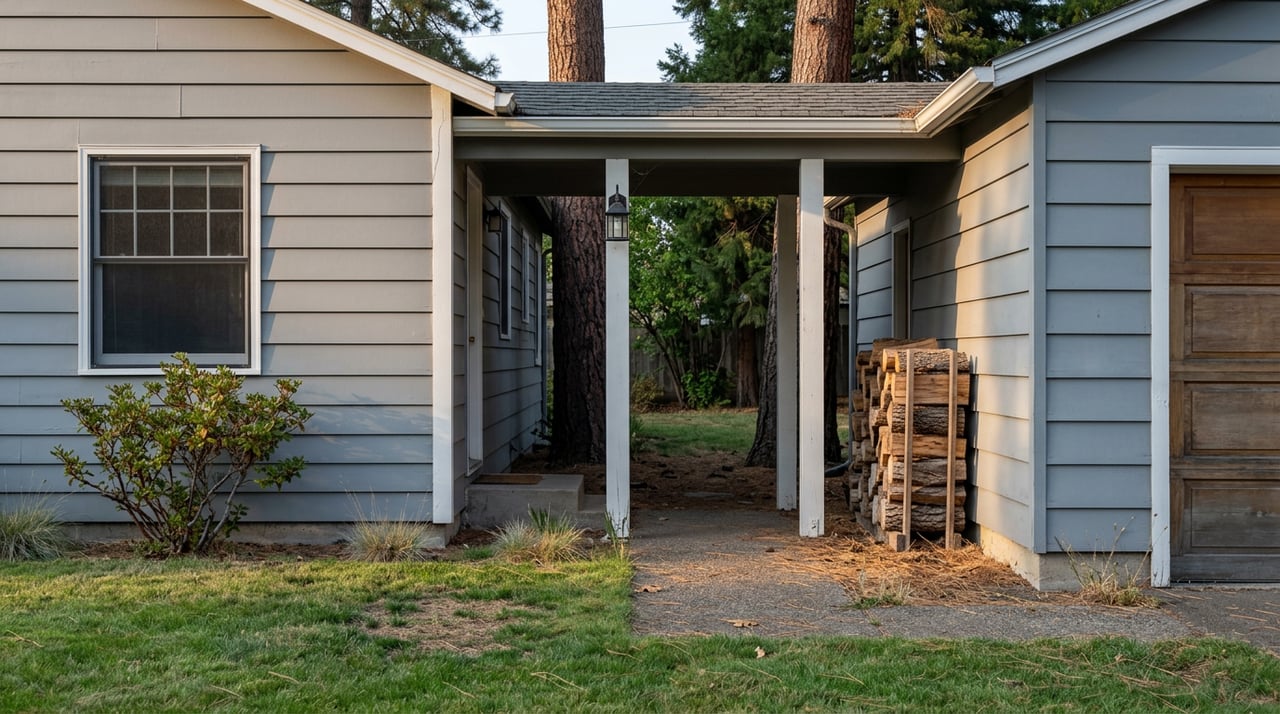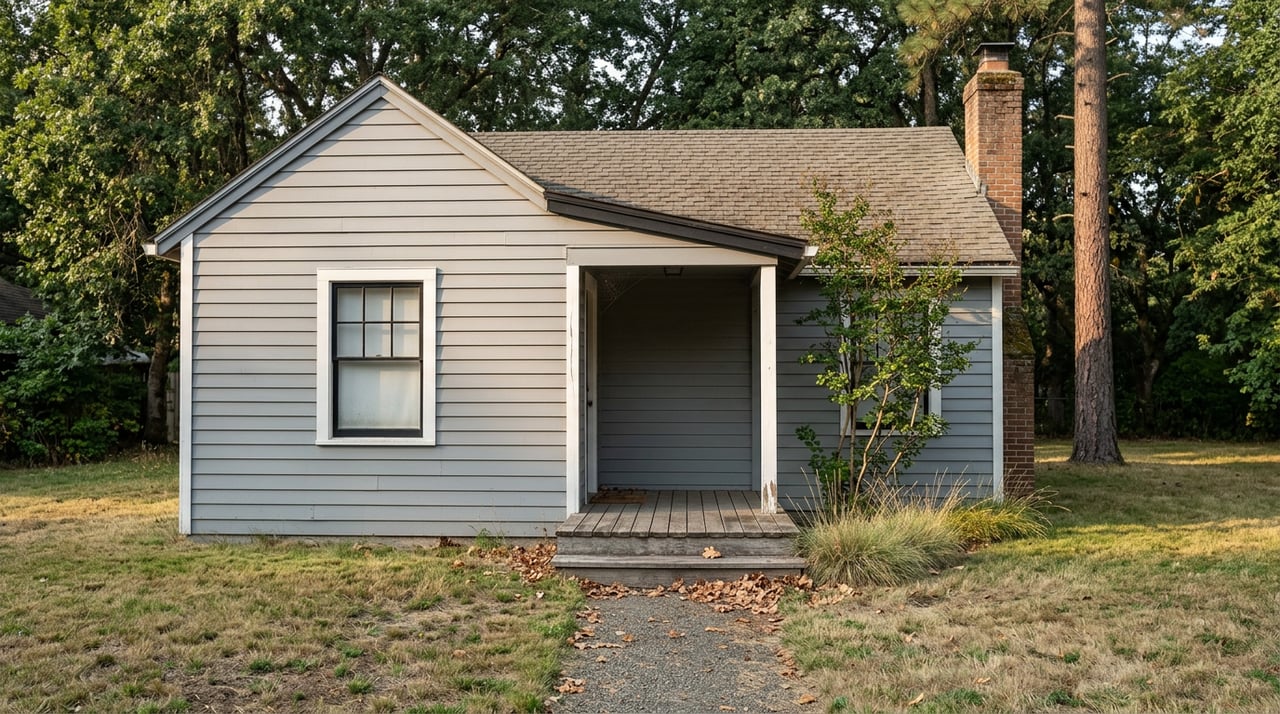
Drive Soulsbyville Road past the intersection with Community Drive and you'll pass two historical markers standing across from each other. Most people who live here have driven by both a thousand times without stopping. One is a state plaque from 1950. The other, put up decades later by the fraternal history group E Clampus Vitus, tells a longer version of the same story. Read them together and you get the answer to something that might have crossed your mind if you've ever wondered why this town has one market, one post office, one church, and nothing that resembles a downtown: Soulsbyville was never built to have one.
Most Gold Rush towns in Tuolumne County grew because people passed through them, panned a creek, and stayed. Soulsbyville grew because of a single vein of ore, and when the ore ran its course, the town stopped growing in the way that towns with a Main Street keep growing. What's here now, the park, the pond, the two markers, is close to the original footprint. That's the thing worth knowing if you live here: you're not walking through a town that shrank. You're walking through one that was built at exactly the size its one purpose required.
The gold a kid found while walking a cow home
The story on the E Clampus Vitus marker is more specific than most town origin stories get. Ben Soulsby settled in the area in 1851. It was his son, a boy of twelve, who found the gold, and he found it by accident. One evening, walking the family cow home, he noticed something in the ground. He told his father, who went out to look and found a rich vein of ore close to the surface. The boy wanted to stake the claim himself. He was too young, so his father did it for him.
That claim became the Soulsby Mine, and the camp that grew up around it became Soulsbyville, founded in 1855. According to the state historical landmark record, it holds the distinction of being the first community in Tuolumne County founded entirely on the operation of a single lode mine, not a river claim, not a crossroads, one mine.
The number that explains the shape of the town
By 1858, the mine had drawn its first wave of labor: 499 Cornish hard-rock miners, known locally as "Cousin Jacks," who specialized in the deep vein mining that placer prospectors upstream didn't have the skill for. The vein they worked ran twelve feet wide and went down 650 feet, worked with two Ingersoll and two Darlington drills feeding a fifteen-stamp mill. By 1900, the mine had produced more than $6.5 million in gold.
That's the number that made Soulsbyville a real town instead of a temporary camp. And for a while, it looked like most other Mother Lode boomtowns. By May of 1877, according to the historical record, Soulsbyville had two general stores, a meat market, a school, a church, three saloons, and several boarding houses. That's a working town, not a mining camp.
What's here now is not that town. It's one market, one post office, and one church, the United Methodist Church that still stands behind the markers today. The mine closed. The stores and saloons that depended on miners' wages closed with it. Nothing replaced them, because nothing else had ever been the reason people were here.
What's left standing, and why it's laid out this way
If you've walked Willow Springs Park, the 2.1-acre stretch of trail near the center of town, you've already covered most of what remains. It's a short, well-kept loop, good for a morning run or an evening walk with the dog, and it sits close enough to the original mine site that you're likely retracing streets the Cousin Jacks walked to their shift.
Willow Springs itself is also home to a small community fishing pond, open to residents who pay dues for access to that shared area. It's not a public lake and it's not advertised the way a park amenity usually is. It functions the way a lot of things in Soulsbyville function: quietly, for people who already live here, without much signage pointed at anyone passing through on Highway 108, which runs eight miles from Sonora to reach town.
That's worth sitting with for a second. A town that once had three saloons now has a fishing pond that requires a membership. Not because the town declined in some vague sense, but because the thing that built the town, the mine, only ever supported one version of Soulsbyville, and once it closed there wasn't a second industry to replace it with a second Main Street. The quiet is structural, not incidental.
Reading the markers themselves
If you stop at the intersection, the two markers tell slightly different stories at different lengths. The official 1950 marker, landmark number 420, is short: site of the Soulsby Mine, first community in the county founded on lode mining alone, first Cornish miners arriving in 1858. It was erected by Soulsbyville citizens and the Tuolumne County Gold Centennial Celebration Committee, the kind of civic marker meant to summarize, not narrate.
The Clampers' marker, put up in 1986, fills in what the short version leaves out: Ben Soulsby's 1851 arrival, his son's discovery, the age of the boy, the fact that his father staked the claim because a twelve-year-old legally couldn't. It's the version with a human being in it instead of just a date and a dollar figure.
Standing between the two, with the Methodist church in the background, you're at the one spot in town where the whole history is laid out in two competing lengths, official and informal, both correct, one just more curious about the boy with the cow.
Living with a town this size
None of this means Soulsbyville is stuck in 1877. It means the town's present shape, one market, one post office, one church, a small park, a members-only pond, is a direct line from a single mining claim rather than a modern planning decision or a population decline anyone needs to explain away. If you've ever wondered why there's no strip of shops to walk to, why the nearest real grocery run means driving toward Sonora, the answer isn't that Soulsbyville lost something. It's that it was never going to have it in the first place. The mine dictated the size of the town, and the size never had a reason to grow past what the mine needed.
That's a different kind of quiet than a town running out of steam. It's a town built once, for one purpose, that has simply kept being exactly that ever since.
If you're curious about the parts of Soulsbyville's history that don't make it onto either marker, or you're weighing what a property here actually offers compared to towns built around a Main Street instead of a mineshaft, the team at SierraShift has spent years working this specific stretch of Tuolumne County and is glad to talk through it, no obligation required.