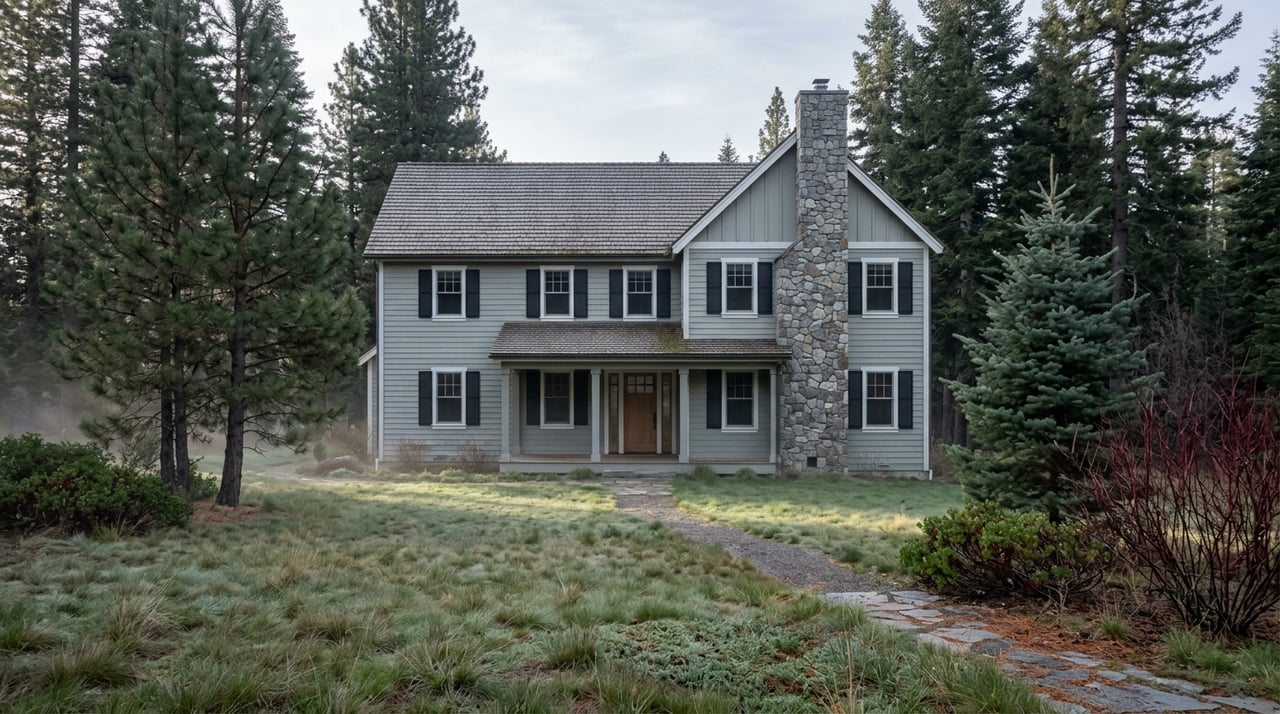
Drive through Mi-Wuk Village looking for a town center and you will drive past it. There is no Main Street, no cluster of storefronts, no obvious place where civic life happens. The village has a market, a gas station, one restaurant, and a coffee house. By the metrics most people use to judge whether a place has a real community, Mi-Wuk Village should not have one.
It does. It just runs it out of a fire station.
The building with two names
When the Tuolumne County Library closed its Mi-Wuk Village and Pinecrest branches, residents did not simply lose a place to check out books. They lost one of the few pieces of public infrastructure the village had. Rather than accept that, community members worked with the county to lease half of what had previously been the Mi-Wuk fire station to the Mi-Wuk Area Homeowners Association, which now runs a community library out of the space at 24411 Sierra Park Road with support from High Country Friends of the Library.
That detail is easy to skim past, but it says something specific about how this town works. There was no developer stepping in, no grant-funded rebuild. A homeowners association negotiated a lease on half a decommissioned firehouse and turned it into a library because the alternative was no library at all.
Meanwhile, the fire district's active station, at 24247 Highway 108 in Sugar Pine, is doing its own second job. It is still a working firehouse, but it also hosts the Mi-Wuk/Sugar Pine Fire Protection District Auxiliary's annual fundraiser dinner, the kind of event that keeps the district's equipment budget afloat between grant cycles.
Here is the pattern in one place:
| Building | Original job | Current job |
|---|---|---|
| Former fire station, Sierra Park Road | Fire station | Community library, run by the homeowners association and High Country Friends of the Library |
| Active fire station, Highway 108, Sugar Pine | Fire station | Still a firehouse, plus the Auxiliary's annual fundraiser dinner |
Two buildings built for the same purpose. One retired into civic reuse. One still working its original job while moonlighting as a fundraising venue. Neither would exist as anything more than a fire station if residents had waited for someone else to solve the problem.
A craft fair built out of a wildfire year
The clearest example of that instinct is Chief Fuller Day. The event has run nearly every Labor Day weekend since 2013, when it was created specifically to help the community during the Rim Fire, both for morale and for the local economy that fire season had gutted. It was not conceived as a nostalgia piece or a tourist draw. It was a direct response to a bad year, organized by Mike Laurance, who owns Mi-Wuk Kettle Corn and has run the event ever since.
What Chief Fuller Day actually looks like on the ground has stayed fairly consistent over the years it has run: dozens of craft and food vendors selling things like carved wooden bears and homemade baked goods, live music through the afternoon, and Laurance's own kettle corn stand anchoring the fairgrounds. It happens on the same Labor Day weekend that the fire district auxiliary holds its spaghetti dinner at the working station in Sugar Pine, past dinners have run around $10 for adults and $5 for kids ten and under, with salad, garlic bread, and ice cream included. Two volunteer-run events, timed to the same weekend, built around two different fire station buildings, both keeping a version of the same promise: if the county or the market will not fund something the town needs, the town will fund it itself.
The year the paperwork won
None of this runs on autopilot, and the closest thing to proof is the year it did not happen. In 2019, Chief Fuller Day had to be canceled after a change in Caltrans requirements, combined with the retirement of both a Caltrans contact and the county's roads engineer, left Laurance unable to file an amended traffic plan in time. As he put it to local reporters at the time:
"We got a call from the State of California, Caltrans, on August 22nd, saying we did not have the correct paperwork and permits, and we did not have a permit fee of $490."
The board of supervisors was not scheduled to meet again before the weekend, so there was no path to a last-minute fix. The craft fair sat out that year. The spaghetti dinner did not. It went on as scheduled at the fire station, because it did not depend on a state highway permit, only on the fire district's own building and its own volunteers.
That gap between the two events is worth sitting with. One piece of Mi-Wuk Village's civic calendar answers to Caltrans. The other answers only to the people who show up to cook. The second one is sturdier, and it is not an accident which kind of event the fire district chose to build.
What's normal here isn't normal a few miles down the highway
Compare this to Sonora or Twain Harte, both a short drive away, where a downtown business district, a city government, and an established retail base do a lot of this work by default. Sonora's monthly Art Night draws people downtown because there is a downtown to draw them to. Mi-Wuk Village has none of that retail density to lean on. What it has instead is Pine Cone Cafe, essentially the town's one sit-down restaurant, Mi-Wuk Market for basics, and a fire district that has quietly become the village's default civic institution by process of elimination.
It is not that Mi-Wuk Village lacks entertainment options. Black Oak Casino Resort sits close enough to draw residents in for concerts and comedy nights on a rotating schedule, and Stanislaus National Forest is right there for anyone who wants a trail instead of a parking lot. The choice to keep running Chief Fuller Day and the spaghetti dinner every Labor Day, even with a casino's paid entertainment ten minutes away, is not about lack of alternatives. It is about which weekend residents actually consider theirs.
If you already live here, none of this is a surprise. You have eaten the spaghetti, or you know someone who has. You have probably checked out a book from a building that used to have a fire engine parked in it. What might be new is seeing the two threads laid next to each other: the library that survived a county cutback and the craft fair that survived a wildfire, both running through the same institution, both proof that this town's infrastructure gets built by the people living in it rather than handed down from somewhere else.
That is worth knowing if you own property here, because it means the value of living in Mi-Wuk Village is not really about proximity to services. It is about how much the town's residents are willing to build themselves when those services do not show up on their own.
SierraShift has spent years working in towns exactly like this one across Tuolumne County, where civic life often runs on volunteer hours instead of tax revenue. If you are curious what a home in Mi-Wuk Village is actually worth in today's market, request a free home valuation and we will walk you through what the numbers mean for your specific street.