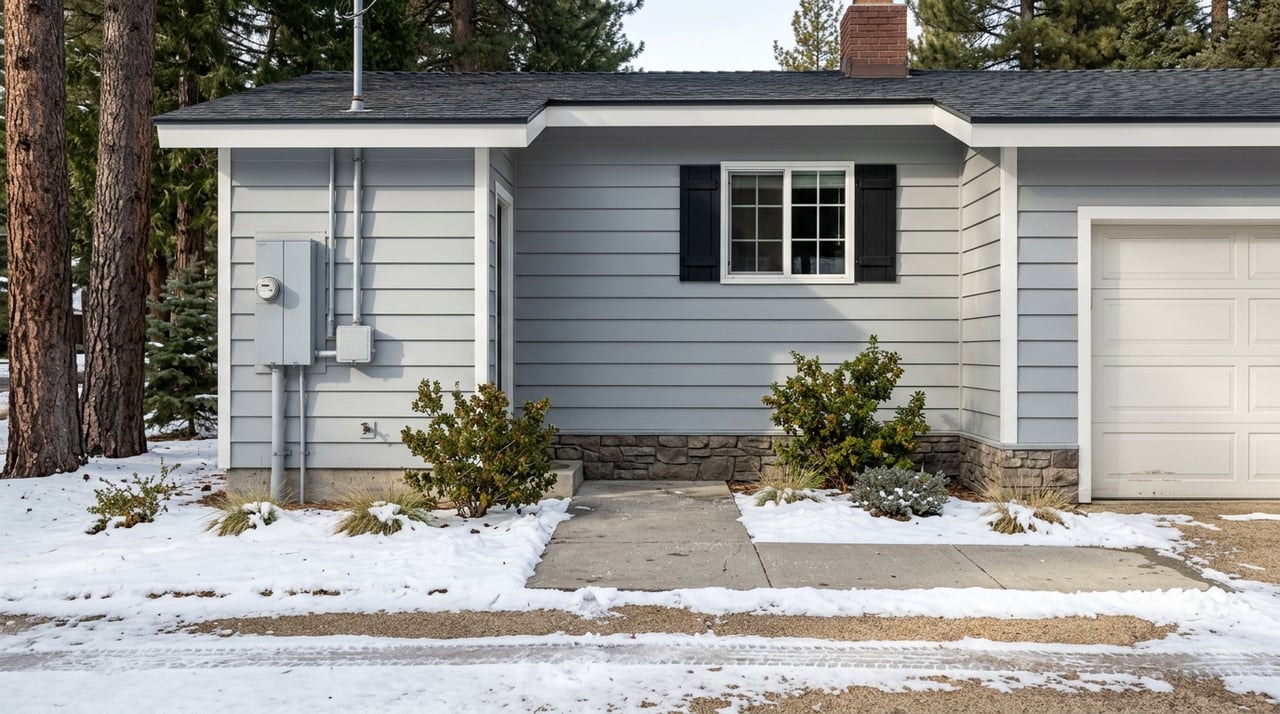
Dreaming about a Mi-Wuk Village cabin? Before you fall for the wood stove, trees, or deck views, make sure you understand how the property works day to day. In this higher-elevation Tuolumne County market, utilities and winter access can vary from one parcel to the next, especially if you are buying a second home, vacation cabin, or investment property. This guide will help you focus on the practical details that matter most so you can move forward with more confidence. Let’s dive in.
Why utilities and access matter in Mi-Wuk Village
Mi-Wuk Village is a primarily residential mountain community with single-family homes, secondary residences, and vacation cabins. It is also part of Tuolumne County’s regular higher-elevation snowplow area, which means winter conditions are a real part of ownership.
That combination makes due diligence especially important. A cabin here may have very different road access, water service, wastewater setup, and internet options than a property just a short drive away.
Road access comes first
When you buy a cabin in Mi-Wuk Village, start with the road. The most important question is not just whether the home feels easy to reach on a clear day, but who maintains the road and what happens during snow.
Tuolumne County says county-funded roads are plowed by county crews, private roads are not plowed by the county, and County Service Area roads are serviced by private contractors. State highways such as SR 108 are handled by Caltrans.
Know what type of road serves the property
Road ownership affects how access is managed in winter. In Mi-Wuk Village, a home may sit on a county-maintained road, a CSA road, or a privately maintained road.
That distinction matters because service levels are not the same. Tuolumne County also notes that it has not taken new subdivision roads into the county-maintained system since 1989, so many neighborhood roads remain in special-district or private-maintenance arrangements.
Understand winter plowing expectations
The county says snowplowing is generally done on one daylight-oriented shift. During normal shifts, snow control begins around 3 inches on the pavement.
The county also makes clear that berms left at driveways are the homeowner’s responsibility. If you plan to use the property in winter, you will want a realistic picture of how quickly access is restored after a storm and what you may need to handle yourself.
Check the driveway, parking, and turnaround
A road can be plowed, but that does not always mean your cabin is easy to access. You should confirm whether the driveway can handle snow removal, whether there is enough space for turnaround, and whether winter parking creates access problems.
Tuolumne County advises motorists to avoid parking in the right-of-way because blocked access can slow or stop plowing. It also recommends tire chains when conditions require them.
Water service is parcel-specific
Mi-Wuk Village has an established public water system, but you should still verify exactly how a specific property is served. California Drinking Water Watch identifies Mi Wuk Village Mutual Water Company as the local system, with 746 residential service connections and 1,076 people served.
Its listed sources include three wells, a summer surface-water source from the Main Tuolumne Canal, and emergency interties with nearby systems. That is helpful context, but it does not replace parcel-level verification.
Confirm whether the home is on the mutual system or a well
One of the first utility questions to ask is whether the property is connected to the mutual water company or served by a private well. Do not assume every cabin in the area has the same setup.
The mutual water company’s 2023 Consumer Confidence Report says it uses three hard-rock wells in fall, winter, and spring, and a surface-water source from the Main Tuolumne Canal in summer. For a buyer, that means it is wise to confirm the service type and ask how the property handles seasonal and winter water needs.
Ask about backup and winter function
Water service is about more than the source. You should also ask whether there is backup water support or pressure support for winter use.
If the home depends on equipment that could be affected by power loss or freezing conditions, that is worth understanding before you write an offer. A clear utility picture can help you avoid surprises after closing.
Septic and wastewater need close review
Many mountain buyers are used to city sewer systems, but Mi-Wuk Village buyers should not assume that setup here. Tuolumne County’s Environmental Health Division oversees onsite wastewater systems, and parcel-level verification is essential.
The county says septic tanks and drainfields require regular inspection and pumping. Standard septic systems should be inspected at least every 3 years and pumped as recommended, generally every 3 to 5 years, while alternative systems usually require annual service.
Request the septic records early
If the home was built after 1995, Tuolumne County says the septic tank, drainfield, and reserve drainfield should be shown on the as-built drawing on file with Environmental Health. That makes the as-built one of the most useful documents in your due diligence process.
You should also ask the seller for maintenance records, pumping history, and any service documents for alternative systems. These records can tell you a lot about how the property has been cared for.
Locate the tank and drainfield
It is important to know where the septic tank and drainfield are located, not just that they exist. That matters for future maintenance, snow-season access, and any plans you may have for outdoor use of the property.
A simple question can save a lot of confusion later: where are the tank, drainfield, and reserve area shown on the as-built?
Power and site conditions deserve attention
PG&E serves Mi-Wuk Village. That gives you a starting point, but a buyer should still look closely at how electric service reaches the home and how the property functions during winter conditions.
Tuolumne County also notes that streetlight repair is handled by PG&E, although some lights may be privately owned if they are not in an established lighting district.
Review overhead vs. underground service
Ask whether the power service is overhead or underground. Also check whether the electric meter is easy to access in winter.
On a mountain property, these details can affect convenience and maintenance. They are especially important if snow buildup or site layout could make access harder.
Ask how the property handles outages
If power goes out, you will want to know what happens to the well pump, Wi-Fi, and any backup systems at the property. Since PG&E serves the area, the right question is not only who provides power, but how the home is set up to function when conditions are less than ideal.
That is an especially smart question for second-home owners who may not be on site full time.
Internet can vary by exact address
If you plan to work remotely, stream content, or use connected security devices, never assume internet service based on a general neighborhood description. In mountain communities, service can vary significantly by address.
Tuolumne County tells residents to check the FCC National Broadband Map by address to see what providers serve a location and what service types and speeds are reported.
Availability and performance are different
The FCC says the map shows provider-reported availability, not actual performance. It may list technologies such as fiber, cable, DSL, satellite, and fixed wireless, but that does not guarantee the service will meet your daily needs.
For buyers, that means “internet available” and “internet works well for remote work” are two different questions.
Test for real-world use
A smart Mi-Wuk Village buyer should ask:
- What providers actually serve the address?
- What wired speeds are available?
- Is the service reliable enough for video calls and home security?
- If the home relies on satellite or fixed wireless, do trees or terrain interfere with the signal?
Tuolumne County specifically notes that trees and terrain can prevent satellite or fixed-wireless service from working at a given address. If internet matters to you, verify it on site whenever possible.
Mi-Wuk is not always like nearby communities
One reason buyers can get tripped up is assuming mountain communities all work the same way. They do not.
For example, Twain Harte Community Services District says it provides fire protection, water, sewer, park and recreation, and hydroelectric services in Twain Harte. Mi-Wuk Village can be more parcel-specific, which makes direct verification of water, wastewater, and access more important during your search.
Your Mi-Wuk Village due diligence checklist
Before you write an offer on a cabin in Mi-Wuk Village, make sure you can answer these questions clearly:
- Is the road county-maintained, CSA-maintained, or private?
- Who plows the road, and how soon after a storm?
- Can the driveway and turnaround handle winter access?
- Is parking in the right-of-way restricted or likely to affect plowing?
- Is the property on the mutual water system or a private well?
- Where does the home’s water come from seasonally?
- Is the property served by septic or another onsite wastewater system?
- Where are the tank, drainfield, and reserve area located?
- Are as-built records and maintenance records available?
- Which internet providers serve the exact address, and what speeds are actually available?
- If power goes out, how are the well pump, Wi-Fi, and any backup systems supported?
Smart cabin buying starts with clear answers
A Mi-Wuk Village cabin can be a wonderful fit for full-time living, weekend use, or long-term investment, but mountain ownership works best when you understand the details upfront. Road maintenance, snow access, water source, septic records, power setup, and internet service all deserve a close look before you commit.
That is where local guidance can make a real difference. If you want help evaluating cabins in Mi-Wuk Village or comparing one property’s utility setup against another, connect with Kayla Njirich-Weldon for practical, local insight.
FAQs
What road maintenance should you verify for a Mi-Wuk Village cabin?
- You should confirm whether the property is on a county-maintained road, a County Service Area road, or a private road, because winter plowing and maintenance responsibilities differ by road type.
What water system serves Mi-Wuk Village properties?
- Mi Wuk Village Mutual Water Company is the established local public water system, but you should verify whether a specific property is connected to that system or served by a private well.
What wastewater system is common for Mi-Wuk Village cabins?
- Many properties rely on onsite wastewater systems such as septic, so you should ask for the as-built drawing, maintenance history, and the location of the tank and drainfield.
What internet checks matter for a Mi-Wuk Village home?
- You should verify the exact address on the FCC broadband map, confirm which providers serve it, review reported speeds, and test real-world performance if remote work or streaming matters to you.
What winter access issues should Mi-Wuk Village buyers ask about?
- You should ask who plows the road, how quickly plowing typically happens after a storm, whether berm removal at the driveway is your responsibility, and whether the driveway layout works well in snow.
Why is parcel-level due diligence important in Mi-Wuk Village?
- Utility service and winter access can vary from one property to another, so direct verification of roads, water, wastewater, power, and internet is one of the most important parts of buying wisely here.